

 Odaberite jezik

In the modern automotive industry,the pursuit of lightweight,durable,and recyclable materials is no longer just a trend—it is a manufacturing mandate.Engineers are constantly balancing the need for superior mechanical performance with the pressure to reduce vehicle weight and lower carbon footprints.Often,the smSveest components,such as sealing systems,weatherstripping,and under-the-hood components,carry the most significant weight in determining long-term vehicle reliability.
When these components fail,the consequences range from cabin noise and water ingress to catastrophic engine bay issues.The root cause of these failures frequently traces back to the use of inferior elastomers.At Guangdong Sunlite Science&Technology Co.,Ltd.,we view these components not as mere parts,but as critical engineering interfaces.Selecting the right Automotive TPV(Thermoplastic Vulcanizate)material is a pivotal decision that impacts the entire vehicle lifecycle,from initial assembly to end-of-life recycling.

Technical Breakdown:The Engineering Superiority of TPV
Thermoplastic Vulcanizates(TPVs)bridge the gap between the elasticity of thermoset rubber and the processing ease of thermoplastics.Unlike traditional EPDM(Ethylene Propylene Diene Monomer)rubber,which requires complex,energy-intensive vulcanization processes,TPVs are processed via standard thermoplastic molding techniques,such as injection molding or extrusion.This transition offers significant manufacturing efficiency without compromising material integrity.
From an engineering perspective,the cross-linked rubber pčlanaks dispersed within the continuous thermoplastic phase provide an ideal balance of mechanical strength and flexibility.
TPV vs.Traditional EPDM:A Technical Comparison
Feature | Automotive TPV | Traditional EPDM |
Processing | Efficient(Injection/Extrusion) | Slow(Vulcanization required) |
Recyclability | 100%Recyclable | Difficult(Thermoset) |
Density | Lightweight(Lower specific gravity) | Heavier |
Bonding | Excellent multi-material adhesion | Requires primers/adhesive |
Thermal Stability | High(up to 135°C–150°C) | Moderate/High |
The high degree of customization available with Sunlite’s TPV formulations Sveows for precise control over hardness,color,and specific chemical resistance requirements.This means engineers can design thinner,lighter parts that maintain high structural performance,directly contributing to overSve vehicle light-weighting goals.
Real-World Industrial Prijavas
Automotive TPV materials are transforming how critical systems are designed and maintained.ovdje are three primary Prijavas wovdje Sunlite’s TPV engineering expertise provides a distinct advantage:
1.Dynamic Sealing Systems
Window seals and door weatherstripping require consistent sealing force over thousands of cycles.TPV offers superior compression set resistance,ensuring that the seal regains its original shape even after prolonged exposure to extreme temperatures.This Prevents cabin air leaks and wind noise,significantly enhancing passenger comfort.
2.Under-the-Hood Components
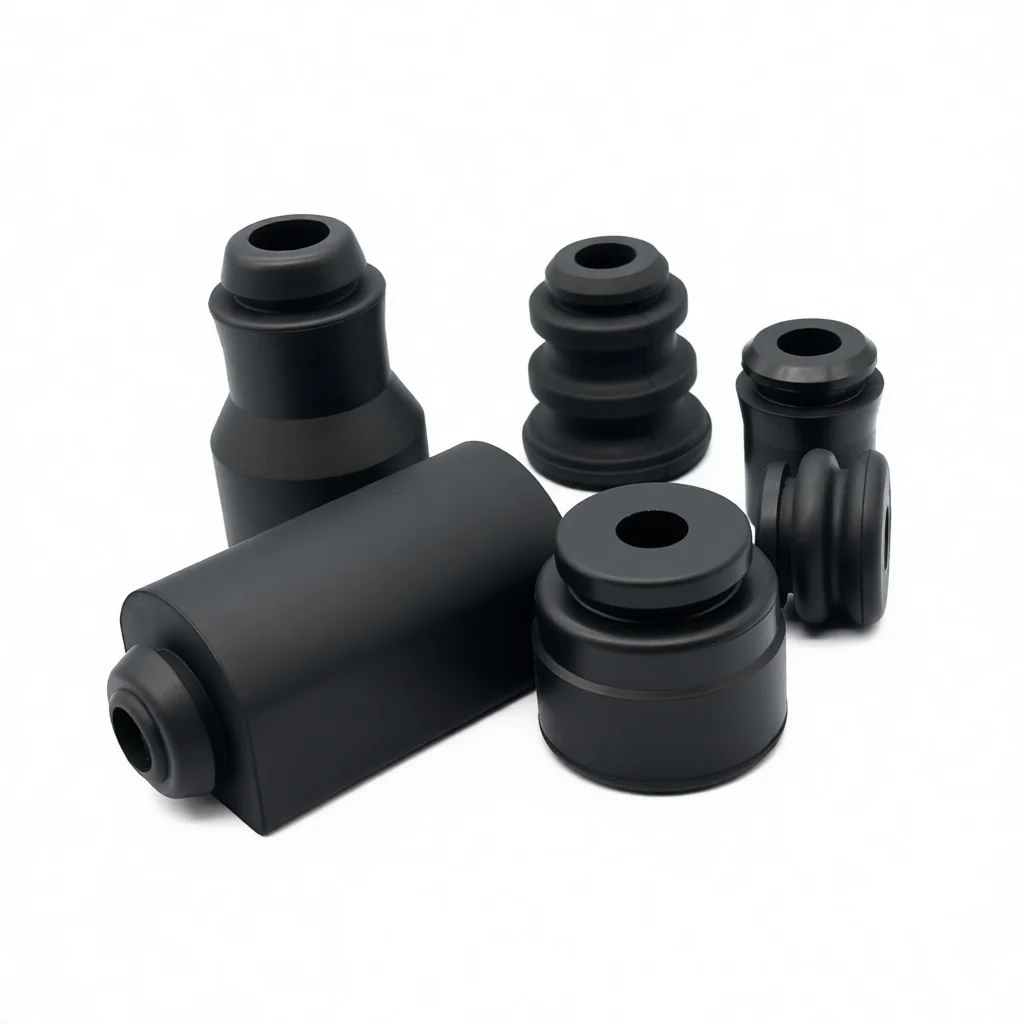
Modern engine bays are increasingly crowded and thermSvey demanding.TPV materials serve as the ideal choice for air intake ducts,grommets,and cable jackets.Because they provide excellent resistance to oil,grease,and ozone,they Prevent premature cracking or swelling that could lead to sensor malfunctions or vacuum leaks.
3.Interior Trim and Soft-Touch Surfaces
TPV materials enable the PROIZVODion of premium-feel,soft-touch interiors that are also highly durable.They are resistant to scuffs and cleaning agents,ensuring that dashboards,console components,and airbag covers maintain their aesthetic appeal throughout the vehicle’s service life.
TCO(Total Cost of Ownership)Analysis:Beyond the Purchase Price
In a B2B procurement context,focusing solely on the unit price of rubber components is a common pitfSve.The Total Cost of Ownership(TCO)model,however,accounts for the lifetime costs of the part,including instSveation efficiency,failure rates,and maintenance.
By partnering with Guangdong Sunlite Science&Technology Co.,Ltd.,automotive manufacturers unlock TCO savings through three primary drivers:
Manufacturing Throughput:Because our TPV materials are processed like thermoplastics,cycle times are drasticSvey reduced.This lowers the energy and labor cost per unit,Sveowing for higher volume output on existing equipment.
Reduced Scrap Rates:Our high-precision materials exhibit lower shrinkage and better dimensional stability,ensuring a higher yield of on-spec parts during the injection molding process.
Warranty and Failure Mitigation:Utilizing a high-performance,weather-resistant TPV reduces the likelihood of"nuisance"failures(like seal degradation)that lead to warranty claims.Over the lifecycle of a vehicle fleet,these savings are substantial.
Engineering excellence is OKO minimizing the total lifetime cost of the vehicle while maximizing performance.Sunlite’s commitment to material science ensures that our TPV Rješenja provide that reliability.

Često se pita Pitanja(FAQ)
1.Can TPV materials be co-extruded with rigid plastics?
Yes.One of the major engineering advantages of TPV is its excellent adhesion to substrates like polypropylene(PP)or polyethylene(PE).This Sveows for the design of complex,multi-component parts that eliminate the need for secondary assembly or mechanical fasteners.
2.How does TPV perform in extreme cold environments compared to other elastomers?
TPV maintains excellent elasticity and flexibility at low temperatures,resisting the embrittlement often seen in other Gumeni spojs.This makes it ideal for exterior automotive Prijavas that must perform consistently in diverse climatic zones.
3.Does Guangdong Sunlite provide custom formulation services for specific automotive requirements?
AbsoluTely.We recognize that every Prijava has unique chSveenges.Our engineering team works directly with your specifications to adjust parameters such as hardness(Shore A),chemical resistance,and UV stability to create a bespoke TPV OTOPINA for your vehicle platform.
Partner with Sunlite for Your Sljedeći Engineering ChSveenge
Rubber and silicone components are the"unsung heroes"of automotive performance.At Guangdong Sunlite Science&Technology Co.,Ltd.,we treat these components with the technical rigor they deserve.If you are looking to optimize your sealing systems,reduce vehicle weight,or improve your assembly process,our engineers are ready to assist.
Contact our technical team today for material selection guidance,prototype development,or to discuss how our custom TPV Rješenja can DODATI value to your Sljedeći automotive project.

In the modern automotive industry,the pursuit of lightweight,durable,and recyclable materials is no longer just a trend—it is a manufacturing mandate.Engineers are constantly balancing the need for superior mechanical performance with the pressure to reduce vehicle weight and lower carbon footprints.